

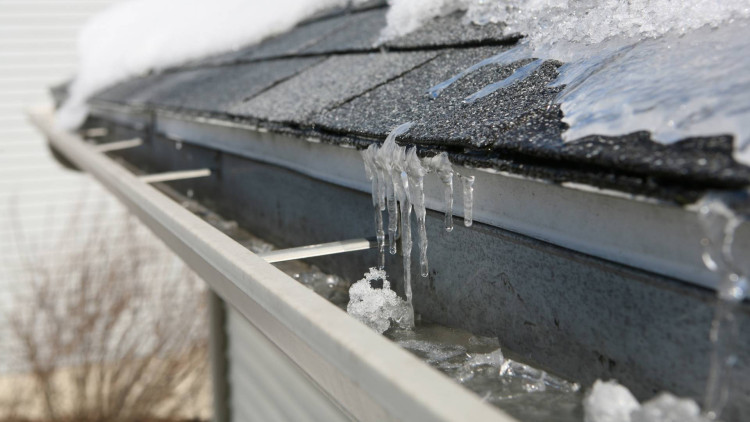
As Indianapolis winters bring below freezing temperatures, ice can form on the edge of your roof, gutters, and eaves. A variety of factors can cause ice to develop, and it’s vital that you uncover what’s causing the issue since ice buildup, icicles, and ice dams can lead to costly roof damage and troublesome leaks.
Read on to uncover what makes ice build up on your roof and how to safeguard your home from it.
The Trouble with Ice Dams
When your roofing, insulation, and gutters are in good condition, the snow melts on your roof and is channeled away from your home by your gutter system.
Trouble occurs when there are spots on your roof that are warmer than others. Inconsistent temperatures lead to snow melting quickly in hot spots and then gathering at the edge of your roof (roof eaves). Since your eaves are usually colder than other parts of your roof, the moisture refreezes before reaching your gutters. That’s when ice builds up and forms an ice dam. Here’s what causes this problematic situation:
Poor Attic Insulation
A well-insulated attic keeps the snow and ice on your roof from forming ice dams. Insulation keeps your home interior warm in the winter, making it more comfortable and providing energy savings. It also helps snow and ice to melt slowly and flow into the gutters steadily so they can handle the excess. Inadequate attic insulation causes water to run down your roof to your eaves, then refreeze and form ice dams.
Worn-Out Roofing
When roofing systems age, your home’s protective layer becomes compromised, putting your most significant investment at risk of damage. A roof that has reached its lifespan allows more heat to escape your home each winter, contributing to the formation of ice dams. If you notice ice dams forming, it may be a signal that it’s time for a roof replacement.
Gutter Problems
Gutters may be small, but they have a big job—to channel water away from your exterior, preserving its integrity over the years. If your gutter system is not clean and free of debris, or if it is sagging, has holes in it, or otherwise faulty, it will prevent water from draining away from your home. In the winter, that means ice dams will form as a result of your faulty gutter system.
Ventilation Issues
If the vents on your roof are not properly placed, they could contribute to the formation of troublesome ice dams.
High Thermostat
If you love to crank the heater each winter, your high thermostat can cause heat loss and contribute to the formation of damaging icicles and ice dams.
The Trouble with Ice Dams and Icicles
Rather than gaze at the beauty of icicles hanging from your roof, realize they are an indication that you should have your roof inspected and deal with any underlying problems. Ice dams keep moisture from exiting your roof and can cause problems if left unaddressed.
Roof Leaks
When water stays on your roof instead of draining away from it due to ice dam formation, you could very likely end up with a roof leak. Water may seep into your attic, interior walls, under roof shingles, and under your siding—causing extensive damage over time.
Damaged Roof Shingles
Backed-up gutters allow water to seep under your roof shingles, causing them to become damaged, loose, or fall off, and making your home vulnerable to more water intrusion. This can lead to damaging rot, unhealthy mold, and troublesome leaks.
Structural Issues
If you don’t fix the underlying problem causing ice dams and icicles, you’ll eventually put your home at risk of costly structural damage. It takes major, extensive repairs to restore your home’s structural integrity, but you can avoid this problem by having your roof inspected and dealing with issues when they are small.
Accident, Injury, or Damage
When icicles grow large and then fall, injuries, property damage, water intrusion, broken gas meters and electric lines, and even broken windows can result. When ice dams fall, gutters and trim can be damaged, and your roof can become so weakened it could collapse.
Keep Your Home Protected from Ice Dams and Icicles
Ensure Your Roof Is in Good Condition
Prevent ice dams with a strong, well insulated, properly ventilated roof, and you’ll protect your home from damaging ice dams and icicles.
Add More Insulation to Your Attic
A well-insulated attic keeps icicles and ice dams at bay and paves the way for ice and snow to melt slowly and drain safely away from your home.
Ensure You Have Ice and Water Shield Installed During Your Next Roof Replacement
Ice and Water Shield is installed along the edge of your roof, in any valleys and around your roof’s penetrations. These are areas vulnerable to water damage or ice accumulation. This protective shield acts as a self-healing membrane, safeguarding your roof from damage. At Craftsman Exterior Remodeling, we install Ice and Water Shields on every roof to prevent future issues and safeguard your investment.
Turn Down the Thermostat
Little changes can actually make a big difference and help you avoid problems with icicles and ice dams. If you have a habit of cranking the heat each winter, bundle up a little more and turn the heat down to bypass ice dam issues.
Don’t Attempt to Remove Ice Dams Yourself
Chipping away at an ice dam can cause more harm than good. You could end up damaging your roofing components or getting injured in the process.
Get a Top Performing Roof Installed with Precision by Our Roofing Experts
At Craftsman Exterior Remodeling, we are an Owens Corning Preferred contractor. Owens Corning is the #1 roofing manufacturer in the world. Their best-in-class warranties, extended warranties, and limited lifetime warranties give homeowners confidence in their roof investment. Learn more about how our roof replacement services can transform your home with an attractive, lasting roof.


